

"What Remains" The Road to Zion (Part 1)
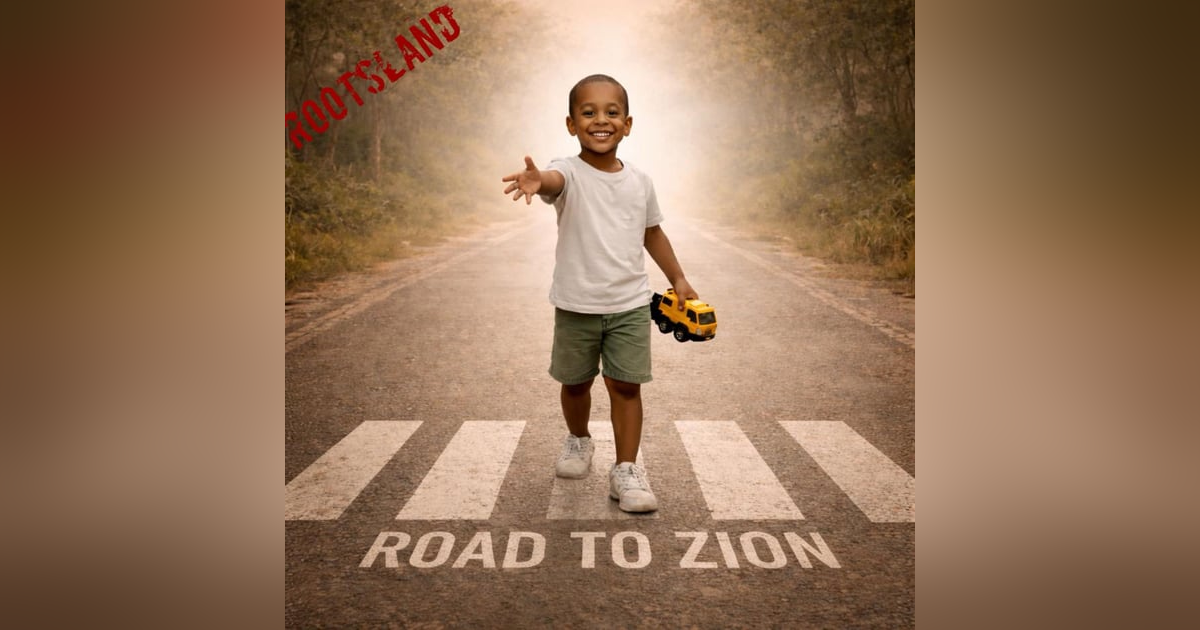


"What Remains" The Road to Zion — Part 1
While boarding a flight from Fort Lauderdale to Kingston, Rootsland host Henry K receives a call from longtime friend and artist Patrick “Curly Loxx” Gaynor of the Jamaican duo Twin of Twins.
Patrick’s young son Zion is dead.
By the time the plane lands in Kingston, a story begins to unfold — one that moves through memory, fatherhood, and the uneasy silence surrounding a child’s death in the streets of Kingston 13.
The first chapter of the Rootsland mini-series The Road to Zion.
Because sometimes the story… is the best song.
Produced by Henry K in association with Voice Boxx Studios Kingston, Jamaica
Featuring Patrick "Curly Loxx" Gaynor
ROOTSLAND NATION Reggae Music, Podcast & Merchandise
subscribe to the Herb and Legends feed below
Easily listen to Herb and Legends in your podcast app of choice
closing credits: Jimmy Cliff Siting in Limbo
Because righteousness govern the world.
Speaker BBroadcasting live and direct from a magical place at the intersection of words, sound and power.
Speaker BThe Roots Land podcast stories that are music to your ears.
Speaker AI'm in the security line in Fort Lauderdale airport.
Speaker AShoes in the bin, boarding pass in my hand.
Speaker AKingston flight about to board.
Speaker AMy phone rings.
Speaker AIt's Curly Locks.
Speaker AHe knows I'm landing in a few hours, but I answer anyway.
Speaker AYes, Patrick.
Speaker AI'm about to get on the plane.
Speaker AHe says something I don't understand at first about Zion, his young son.
Speaker CZion dead in Henry.
Speaker AWhat?
Speaker AHe repeats it.
Speaker CYo, bro, I said, Zion dead.
Speaker AZion's dead.
Speaker AWhat happened?
Speaker CRight now, I can't get a straight answer, bro.
Speaker CI can't get a straight answer.
Speaker CBut I saw my son.
Speaker CAnd it is obvious that he fought for his life.
Speaker CHe fought with everything he had, believe me.
Speaker DGood afternoon, this is the captain speaking.
Speaker EJust about ready.
Speaker AI sat down and buckled in.
Speaker AAcross the aisle was a family.
Speaker AMother, father, and a little girl about Zion's age.
Speaker AShe kept kneeling on the seat and looking out the window, asking questions the way kids do.
Speaker AWhere are we going?
Speaker AHow high are we flying?
Speaker AWhy is the wing moving?
Speaker AHer parents answered patiently, like this was just another flight.
Speaker AShe laughed at something small.
Speaker AI don't even remember what it was.
Speaker AThere's nothing you can do on a plane.
Speaker AYou can't drive anywhere.
Speaker AYou can't see anyone.
Speaker AYou can't fix anything.
Speaker AYou just sit there while the air carries you forward.
Speaker ASo your mind starts moving instead.
Speaker AAnd somewhere over the Caribbean, mine kept going back to Patrick.
Speaker ANot just the artist, not just the songwriter, but the man.
Speaker AWe met at Anchor Recording Studio in Kingston.
Speaker AI was down there working a session that was slipping through my fingers.
Speaker AA roots reggae producer trying to navigate a modern dance hall world that didn't speak my language anymore.
Speaker ACarlilocks was mostly quiet that day, sitting towards the back, watching.
Speaker AThen at some point, he stepped forward.
Speaker ANot loud, not flashy, just steady.
Speaker CYo, engineer, tell Bigger.
Speaker CDo that last line over again.
Speaker CTell him to do it over.
Speaker CYou know, come on.
Speaker AHe began shaping things, guiding the artist, tightening the direction.
Speaker AWhat felt scattered suddenly had direction.
Speaker AAnd that was the beginning.
Speaker AOver the months that followed, the sessions turned into conversations.
Speaker AConversations turned into trust.
Speaker AWe were different in a lot of ways.
Speaker ADifferent paths, different worlds.
Speaker ABut we both knew what it meant to survive in an industry that gives you just enough to stay hungry.
Speaker AWhen that universal project wrapped up and everyone flew back to the States, I stayed in Kingston.
Speaker ADecided to work with Curly Locks and his brother, Two Locks, Patrick and Paul Gaynor.
Speaker ATwin of twins, built a small studio up in Red Hills in my half of a small house I rented overlooking the city of Kingston.
Speaker ABefore I made that decision to return for good, Patrick drove me up into the hills to see a piece of land he and his brother had bought.
Speaker AHe said they paid for it with the crumbs of the music business.
Speaker CYou see this piece of land, Henry K. We got this with the crumbs of the music business.
Speaker AAnd then said, imagine if we get a slice of the cake.
Speaker CJust imagine we get a slice of the cake.
Speaker AWe walked away from the car to a quiet spot on the property.
Speaker AOpen sky.
Speaker AThe kind of land that feels like promise, like a future.
Speaker AThat's when he reminded me about his son, Zion.
Speaker AWe had talked about him for months, but this time was different.
Speaker ACurly said he needed something to break in the business, something fast.
Speaker ANeeded a house built on that land quickly and his little boy, Zion, to live under his own roof.
Speaker AHe said his son was different and needed special care.
Speaker AAnd the only way his son would really be safe was.
Speaker AWould be in Patrick's own home, under his own roof.
Speaker CZion is a special youth.
Speaker CHe's gonna need a special kind of care.
Speaker CI need to be the most urgent.
Speaker CGet him up there.
Speaker CYou know that's the only way he'll ever be safe.
Speaker CI know that.
Speaker AAnd that wasn't ambition talking.
Speaker AThat was a father.
Speaker AYou see, I was a father, too.
Speaker AMy daughter was only five years older than Zion.
Speaker AShe was also born in Kingston, right in the middle of gang wars and police shootouts.
Speaker AI knew what it felt like to lie awake at night, listening, thinking.
Speaker AAnd I knew what it felt like the day I finally got her out.
Speaker AZion deserved that same peace.
Speaker AI remember the first time he came by the studio.
Speaker AHe didn't run up to strangers the way most kids do.
Speaker AHe was shy.
Speaker AStayed close to Patrick at first, watching.
Speaker AHe picked up a small toy truck he'd brought with him to the studio and started driving it slowly around the lines on the floor like they were roads.
Speaker APatrick watched him the whole time we were talking.
Speaker AEvery few seconds, his eyes went back on his son.
Speaker AAt one point, Zion looked up and smiled at him.
Speaker AAnd for Patrick, the world stopped.
Speaker AFor a second, you can see exactly why that house mattered to him.
Speaker AWithin a few years, the music started moving.
Speaker ANot just songs, commentary.
Speaker APatrick's voice calling out corruption, violence, hypocrisy.
Speaker ABegan to echo beyond Kingston 13 and carried with it an invitation to speak at Harvard University, a rare privilege for a youth from the Garrison.
Speaker AThe roof went up on the house, and Zion's room was almost finished.
Speaker AIt would be a room he would never sleep in.
Speaker AThe flight from Fort Lauderdale to Jamaica is just under an hour.
Speaker AAlmost 20 years later, I never really got off that flight.
Speaker DLadies and gentlemen, this is your captain speaking.
Speaker DWe've begun our descent into Norman Manly International Airport in Kingston, Jamaica.
Speaker DPlease return to your seats, fasten your seatbelts, and ensure all carry on items are securely stowed.
Speaker AThe plane touched down hard.
Speaker AIt always does in Kingston, coming low over the harbor and the short Runway.
Speaker AI'm usually first off, first in the customs line.
Speaker AThis time I stayed seated.
Speaker AWhen the cabin door opened, that warm, familiar Kingston air hit me.
Speaker ASalt, fuel, humidity.
Speaker AAll at once.
Speaker AAround me, everything felt ordinary.
Speaker APeople reaching for bags, devices turning back on, conversations starting again.
Speaker AI waited until almost everyone was off, picked up my bag and walked off the plane, looking down at my phone.
Speaker ANo new messages.
Speaker AKingston is always chaotic.
Speaker ABut this time was different.
Speaker AI wasn't calling the twins for my usual airport ride.
Speaker AOutside Norman Manley airport, taxi men were shouting for fares, pulling at bags, competing for passengers.
Speaker ANormally I would have taken one of the unlicensed cabs and saved a few dollars, but not this time.
Speaker AI climbed into a Judah, an official government taxi.
Speaker AAnytime you're heading into the Garrison, you want to know who you're riding with.
Speaker AI was going to Kingston 13, where Patrick and Paul grew up, Ricketts Avenue off a Chisholm, a place they never really left.
Speaker AThe road narrowed as we drove in, music playing somewhere in the distance, people watching the car pass.
Speaker AI stepped out, unwrapped the chain that kept the metal gate closed and started walking towards the yard.
Speaker ABefore I reached the house, I could hear voices.
Speaker AMama Lu, the twins mother screaming for answers.
Speaker APaul was louder, sharper, not grief.
Speaker AThis was something else.
Speaker AWhen you hear a child has died, your mind goes to sickness.
Speaker AAn accident.
Speaker AI wasn't prepared for anything else.
Speaker APatrick came towards me slowly.
Speaker AHe looked like he wasn't fully inside himself, and he began to explain what happened the day before.
Speaker APatrick was hoping to go to the hospital, expecting answers.
Speaker AInstead, they sent him to the morgue.
Speaker AHe wasn't prepared for that.
Speaker AThe room was cold in a way that didn't feel like air conditioning, quiet in a way that hospitals never are.
Speaker AThey pulled back the sheet.
Speaker AFor a second he didn't react.
Speaker AAlmost like his mind was waiting for Zion to move, to breathe, to complain about being woken up.
Speaker APatrick stood there and touched his boy's hand.
Speaker AAnd that's when he knew.
Speaker ANot sickness, not an accident.
Speaker ASomething had happened to his son.
Speaker CAt that mug.
Speaker CI remember the waiting more than the walking.
Speaker CTime felt distorted.
Speaker CPeople were speaking.
Speaker CDoors were opening and closing.
Speaker CBut none of it felt connected to me.
Speaker CI kept telling myself it had to be a sickness, an accident.
Speaker CSomething we would soon understand.
Speaker CThey led me down a corridor.
Speaker CI could hear the normal sounds outside the room.
Speaker CSomeone taking footsteps.
Speaker CLife continuing.
Speaker CThen the door opened.
Speaker CThere was a sheet.
Speaker CA white sheet.
Speaker CI wasn't prepared for how small the shape beneath it was.
Speaker CFor a moment, my mind refused to make the connection.
Speaker CI stepped closer.
Speaker CI told myself it was a mistake.
Speaker CIt had to be a mistake.
Speaker CAnd then I saw him.
Speaker CMy six year old son.
Speaker CHe looked so still.
Speaker CSmaller than I remembered.
Speaker CI was fully conscious, but it felt like I was in a dream.
Speaker CExcept dreams let you wake up.
Speaker CI closed my eyes and opened them again.
Speaker CNothing changed.
Speaker CThere was no difference between seeing and not seeing.
Speaker CI kept waiting for something inside me to react.
Speaker CTears, anger.
Speaker CAnything.
Speaker CBut what came first was silence.
Speaker CNot in the room inside me.
Speaker CI realized standing there, I would never again hear his voice call me Daddy.
Speaker CAnd yet, just outside that door, the world kept moving.
Speaker CWithout my son.
Speaker ANext week, Part two of the Road to Zion.
Speaker AOne love, one heart we are Roots Land.
Speaker ESitting here in limbo But I know it won't be long.
Speaker ESitting here in limbo Like a bird without a song.
Speaker EWell, they're putting up resistance But I know that my faith will lead me beyond.
Speaker ESitting here in limbo Waiting for the tide to flow.
Speaker ESitting here in limbo Knowing that I have to go.
Speaker EYes, I'm putting up resistance But I know that my fate will lead me on.
Speaker EI don't know where life will lead me But I know where I've been I can't say what life will show me But I know what I've seen Tried my end at love and friendship but all that is passed and gone this little boy is moving on
Speaker Chey.
Speaker ESitting here in limbo Waiting for the dice to roll.
Speaker ESitting here in limbo Got some time to search my soul.
Speaker EYes, they're putting up resistance But I know that my faith will lead me on.
Speaker ESitting in limbo Sitting in limbo Sitting in limbo Sitting in limbo.
Speaker BProduced by henry cave.